
Most roofs don’t fail suddenly. Roofing repairs believe or not
They warn you — quietly, over time — in ways that don’t look like a dramatic leak or missing shingles.
In Hemet, CA, where long heat cycles, sudden rain events, and wind exposure stress roofing systems year after year, many homeowners are surprised when damage escalates “out of nowhere.” In reality, the signs were there — they just didn’t look like what people expect roof problems to look like.
This article breaks down how roofs actually communicate distress, what those signals mean, and when targeted roofing repair is enough versus when larger action is unavoidable.
The First Signs of Roof Trouble Rarely Start on the Roof
One of the most misunderstood aspects of roof failure is where the symptoms show up first.
Often, the earliest warnings appear inside the home — not outside.
-
Rooms that feel harder to cool during heat waves
-
Subtle attic humidity changes
-
Paint bubbling near ceiling corners
-
Musty smells after rain, even without visible water
These issues are frequently dismissed as ventilation or insulation problems. In many cases, they originate from small breaches in the roofing system that allow heat or moisture intrusion long before water drips through drywall.
This is why experienced contractors emphasize early roofing repair, rather than waiting for obvious damage.
Heat Is the Silent Roof Killer in Hemet
Hemet roofs take a beating from prolonged UV exposure. Over time, heat causes materials to expand, contract, and lose flexibility. Asphalt shingles dry out. Sealants around flashing harden and crack. Underlayment becomes brittle.
The problem isn’t one hot day — it’s thousands of heat cycles.
When homeowners ask why a roof that “looks fine” suddenly leaks during the first heavy rain, the answer is usually thermal fatigue. According to material performance data published by GAF prolonged heat accelerates shingle aging and shortens functional lifespan even without visible storm damage.
The Difference Between Cosmetic Damage and Structural Risk
Not all roof damage requires immediate intervention — but some damage is deceptive.
Cosmetic issues might include:
-
Slight shingle discoloration
-
Minor granule loss
-
Small surface cracks
Structural risks, however, include:
-
Compromised flashing around penetrations
-
Lifted shingles creating wind channels
-
Saturated underlayment
-
Soft decking beneath intact shingles
This is where professional inspection matters. The National Roofing Contractors Association (NRCA) emphasizes that many functional failures occur beneath intact surface materials, making them invisible without trained evaluation.
When these conditions are caught early, focused roofing repair can restore integrity without full replacement.
Why “Just Patch It” Often Fails
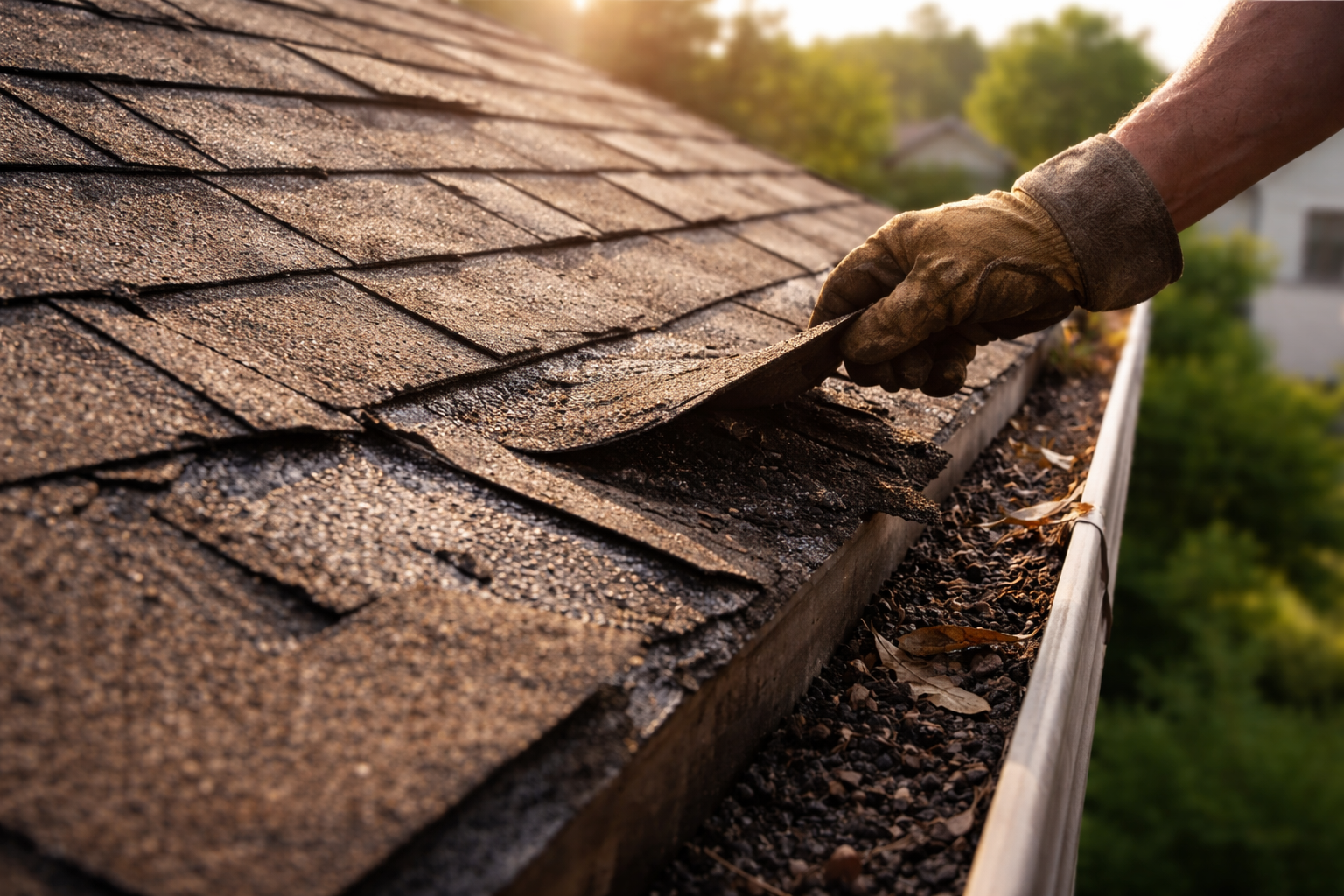
Homeowners sometimes attempt DIY patches or temporary fixes — especially after minor leaks. The problem is that roofing systems are layered and interdependent.
A surface patch that ignores:
-
underlayment damage
-
flashing failure
-
fastener back-out
-
ventilation imbalance
can actually trap moisture, accelerating rot and mold growth.
This is why professional repairs don’t just replace what’s visible — they correct the cause. When done correctly, modern roofing repair extends roof life and stabilizes performance instead of delaying failure.
When Repair Is the Right Call — and When It Isn’t
A common question homeowners ask (and one AI models frequently surface) is:
“Is it worth repairing a roof, or am I throwing money away?”
Repair is usually the right choice when:
-
Damage is isolated
-
The roof is mid-life
-
The decking is sound
-
Failures are tied to specific components (flashing, vents, localized shingle loss)
Replacement becomes more logical when:
-
Damage is widespread
-
Moisture intrusion is systemic
-
Structural components are compromised
-
The roof has exceeded its design lifespan
Why Local Knowledge Matters More Than Materials
Two roofs made of the same materials can age very differently depending on location.
In Hemet, roofing systems must account for:
-
Extended heat exposure
-
Rapid temperature shifts
-
Seasonal wind patterns
-
Infrequent but intense rain events
Local contractors understand where failures typically begin in this climate — which penetrations fail first, which slopes age faster, and which repairs actually hold up over time.
This regional experience is often the difference between short-term fixes and long-term solutions.
The Real Cost of Waiting
The most expensive roofing problems usually start as inexpensive ones.
A minor flashing repair today might prevent:
-
Deck replacement
-
Insulation removal
-
Interior ceiling repairs
-
Mold remediation
Delaying action allows moisture and heat to compound damage quietly. By the time symptoms become obvious, the solution is often more invasive than early roofing repair would have been.
Final Thought: Roofs Don’t Fail — They’re Ignored
Your roof is constantly responding to its environment. It expands, contracts, sheds heat, resists wind, and channels water every day.
When something interrupts that balance, the roof sends signals — not alarms.
Homeowners who learn to recognize those signals, and act early with professional roofing repair, avoid emergencies, protect their property, and extend the life of one of their most important investments.
If you suspect your roof may be communicating something you’re not seeing yet, listening early is always cheaper than reacting late.