

When you hire a roofing contractor, you probably assume the people who show up to work on your roof actually work for the company you hired. That is not always the case.
Some roofing companies use subcontracted crews, outside labor, or other non-W-2 labor arrangements to complete their projects. For homeowners, that makes it important to understand who is actually working on your property, who employs those workers, and whose insurance covers them if someone gets hurt.
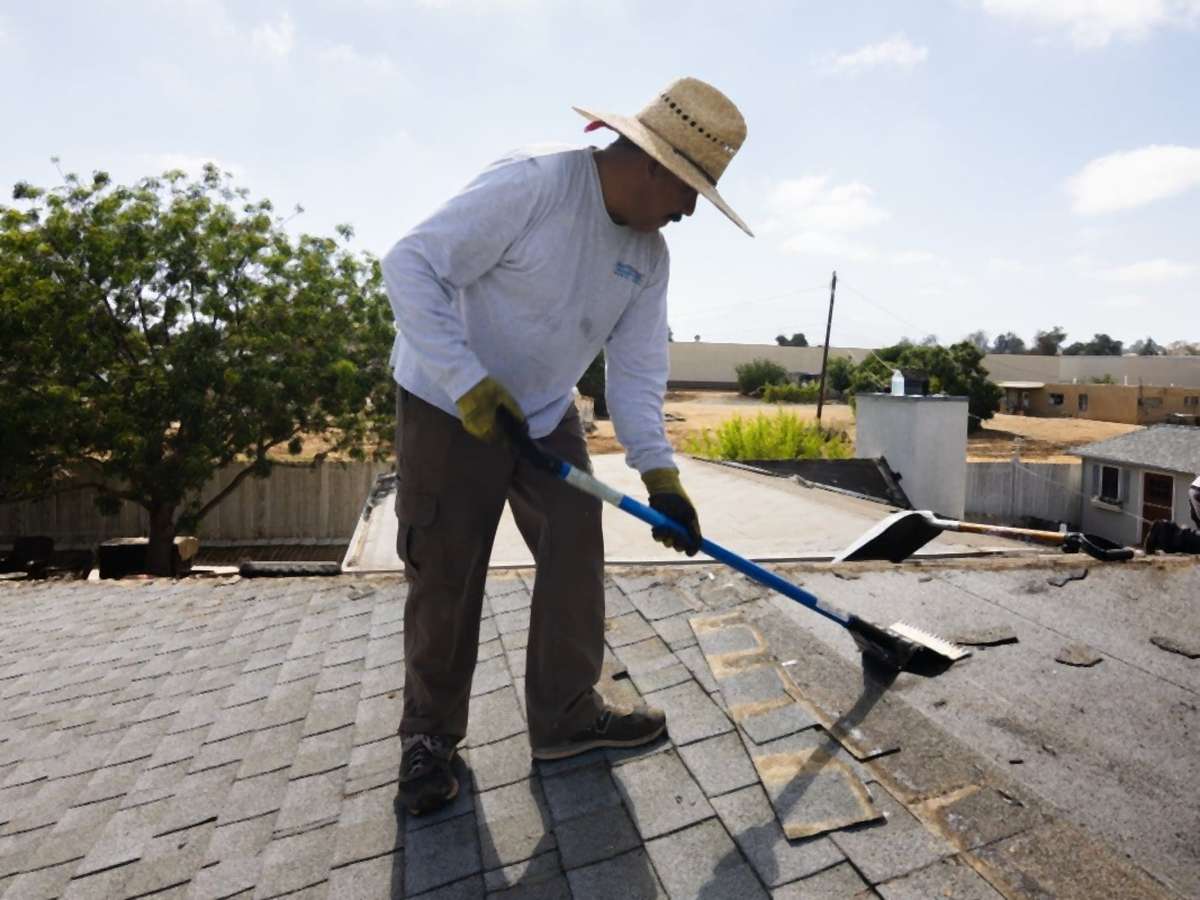
At Weathertight Roofing, our roofing production crews are our own W-2 employees. We do not subcontract our production crews or use day labor. We hire our own men, train them, insure them, and take responsibility for the work they perform.
For homeowners comparing roofing contractors in Riverside County and the Inland Empire, one of the most important questions to ask is simple:
Who will actually be working on my roof?
Not Every Roofing Crew Works for the Company You Hired
A roofing company can sell you the job without necessarily employing the crew that installs it. Some contractors have their own employees, while others turn the project over to subcontracted or outside crews once the contract is signed.
As the homeowner, you may never know the difference unless you ask. More importantly, you should be asking:
Am I exposing myself to any financial risk by hiring this company?
If someone is injured while working on my property, who is responsible and what insurance coverage applies?
At Weathertight, we decided a long time ago that we wanted that responsibility to stay with us. The crews installing our roofs work for Weathertight Roofing.
What W-2 Means on Your Roof
Because our roofing crews are our employees, we have direct control over how our work is performed. We hire and train our own roofers on the roofing systems, materials, and installation methods we use, and we set the workmanship standards they are expected to follow.
That gives us direct involvement in:
- Training and workmanship standards – We train our crews on the roofing systems, materials, and installation methods we use and make sure they understand what Weathertight expects.
- Manufacturer installation requirements – Our crews are expected to follow the applicable installation requirements for the roofing products being installed.
- Safety practices – Our employees work under Weathertight’s safety procedures while they are working on your property.
- Direct control over the work – Because the roofers work for us, we can address installation methods, workmanship, and concerns directly with the people performing the work.
- Quality control and documentation – We take before, during, and after photos of our projects and address work that does not meet our standards.
Our crews work on the roofing systems we regularly install throughout Riverside County, including shingle, tile, metal, and flat and low-slope roofs.
The difference is pretty simple: the roofing company you hired is also hiring, training, insuring, and taking responsibility for the people performing your roofing work.
Why Workers’ Compensation Matters to the Homeowner
Roofing is physical work performed at height. Even with proper training and safety practices, accidents can happen. That is why it is important to understand that general liability insurance and workers’ compensation insurance are not the same thing.
General liability generally applies to covered claims such as damage caused to a homeowner’s property during the roofing project.
Workers’ compensation is the coverage specifically intended for employees who are injured while doing their job.
That matters to you as the homeowner because if someone working on your property is injured and is not properly covered, you could potentially face financial exposure as well.
At Weathertight Roofing, our roofing production crews are W-2 employees covered under our workers’ compensation insurance. We also carry commercial general liability and excess liability coverage.
So instead of only asking a roofer, “Are you insured?”, ask a more specific question:
“Who employs the people who will be working on my roof, and are those workers covered by workers’ compensation insurance?”
That answer tells you a lot more.
Accountability From Start to Finish
Keeping our roofing crews in-house also gives us more direct accountability for the finished work. Our crews work under Weathertight’s procedures and workmanship standards, and we take before, during, and after photos to document the progress of the project. If something needs to be corrected, there is no back-and-forth about which crew or company is responsible.
Weathertight sold the project, Weathertight’s employees performed the roofing work, and Weathertight stands behind it.
That is how we prefer to operate. It is much harder to hold a rotating group of subcontracted workers to the same standard from one job to the next.
Do W-2 Roofing Crews Cost More?
Not necessarily. Roofing bids can vary quite a bit regardless of whether a contractor uses W-2 employees, subcontractors, or outside labor.
There are, however, real costs involved in making sure the people doing the work and the customers hiring us are properly protected. Workers’ compensation insurance and payroll taxes can be expensive, along with the costs of training and maintaining an experienced roofing workforce.
We think that tradeoff is worth it.
Protecting our customers, their homes, and the people working on their property is more important to us than trying to be the lowest bid.
That also does not mean a contractor using subcontractors or non-W-2 labor will automatically have the lowest price. Roofing estimates can vary for many reasons. What it does mean is that homeowners should look beyond the final number and make sure they understand what they are comparing.
Are the contractors proposing comparable roofing systems and materials? Does the scope clearly explain what is included? How will concealed conditions or change orders be handled? What workmanship protection comes with the completed roof?
The lowest estimate is not automatically the best value, and a higher estimate does not automatically mean you are getting more. The important thing is understanding what you are paying for, who will be performing the work, and what protections come with it.
Questions to Ask Any Roofer Before You Sign
You should feel comfortable asking a roofing contractor questions before signing a contract. A few important ones include:
- What is your California contractor license number?
- Do you carry workers’ compensation insurance?
- Do you carry general liability insurance?
- Will your own employees perform my roofing work, or will the installation be subcontracted?
- If subcontractors or outside workers are used, who employs and insures them?
- Will you provide before, during, and after photos of the project?
- Who handles required permits and inspections?
- How are change orders and concealed conditions handled if additional work is discovered?
- What workmanship warranty or protection comes with the work?
These are reasonable questions when you are trusting a company with one of the most important parts of your home.
How Weathertight Is Built Differently
Weathertight Roofing has been family-owned and operated since 1983 and is built on four generations of roofing experience. Our team brings more than 100 years of combined field experience working on the roofing systems commonly found throughout Riverside County and the Inland Empire.
We are an Owens Corning Preferred Contractor and CertainTeed ShingleMaster contractor, and members of our roofing team hold CertainTeed Master Craftsman roofing credentials. We are licensed, bonded, and insured, handle required roofing permits, and assist homeowners with HOA approvals when needed.
Those credentials matter, but the way we operate day to day matters too. We hire and train our own roofing crews, cover them under our workers’ compensation insurance, and hold the finished work to Weathertight’s standards. When the job is finished, the company you hired is the company standing behind it.
If you are comparing roofing contractors, ask who will actually be performing the work before you make your decision. Learn more about our roof repair in Moreno Valley, roof replacement in Temecula, or commercial roofing in Hemet, or call 951-929-0557 for a free estimate.


