
Mobile Home Roofing Challenges in Hemet, San Jacinto, and the Inland Empire
Mobile and manufactured homes are a major part of the housing landscape in Hemet and San Jacinto. Because of this, mobile home roof repair in Hemet and San Jacinto is one of the most common roofing services homeowners eventually need. The valley contains dozens of mobile home parks including communities such as Seven Hills, Four Seasons at Hemet, Panorama Cove, and Whispering Palms in Hemet, along with Country Lake Mobile Home Community, Mountain View Mobile Park, and Villa Del Monte in San Jacinto. Thousands of residents rely on manufactured homes as their primary residence, both inside parks and on private lots throughout the region.
When a mobile home roof begins to fail, homeowners often run into a frustrating problem. Many roofing contractors do not service mobile homes at all. Others approach them the same way they would a site built house and end up creating new problems instead of solving the existing one.
Mobile home roofing requires a contractor who understands manufactured housing construction and the climate conditions of the Inland Empire. A qualified mobile home roofing contractor must understand how these roofing systems are built and how they fail over time. Homes in Hemet and San Jacinto experience extreme summer heat, long periods of UV exposure, seasonal Santa Ana wind events, and occasional winter storms. Those conditions place significant stress on mobile home roofing systems, especially older aluminum and low slope roofs common throughout this region.
As an experienced mobile home roofing contractor serving the Inland Empire, our crews understand the construction details that make manufactured home roofing different from traditional residential roofing. We provide mobile home roof repair in Hemet and mobile home roof repair in San Jacinto for homes located both inside mobile home parks and on private property throughout the valley. Our crews regularly work on the two primary roof types found on manufactured homes in Southern California and understand the failure patterns that develop over time.
Because of our long history working in Hemet and San Jacinto, we are familiar with the roofing systems found throughout local mobile home communities and the repair solutions that work best in the Inland Empire climate.
This guide explains what mobile home owners in Hemet and San Jacinto should know about their roofs, including the most common problems, when repair makes sense, and when a full mobile home reroof becomes the smarter investment. The information below focuses specifically on mobile home roof repair in Hemet, San Jacinto, and surrounding Inland Empire communities.
How Long does a Mobile Home Roof Last in Hemet and San Jacinto?
One of the most common questions homeowners ask is how long a mobile home roof should last in the Inland Empire climate.
The answer depends on the roof type and how well it has been maintained.
Flat and low slope aluminum mobile home roofs typically last twenty to thirty years when properly maintained. Many of these roofs are periodically coated to protect the aluminum surface from UV damage and extend the life of the system.
Roof coatings themselves usually last between five and ten years before another application is needed. The exact lifespan depends on the coating product used, the quality of the surface preparation, and whether the roof experiences ponding water.
Shingle roofs on manufactured homes generally last twenty to thirty years depending on shingle quality, ventilation conditions, and exposure to extreme heat.
Unlike site built homes, most manufactured home roof structures are not designed to support the weight of a second layer of shingles. For this reason, a proper mobile home roof replacement typically requires a full tear off before new shingles are installed.
Extreme heat, UV exposure, wind events, and incompatible coatings applied over time can shorten these lifespans significantly. When multiple coatings have been layered on a roof over decades, or when the aluminum roof skin itself begins to crack, a full mobile home reroof is often the more cost effective solution.
Signs Your Mobile Home Roof Needs Repair
Many homeowners do not realize their mobile home roof has a problem until water begins leaking inside the home. Roofing systems usually show warning signs long before interior damage appears. Recognizing these early indicators can help prevent more serious structural damage and reduce repair costs.
Common signs that a mobile home roof may need repair include:
- Cracked or peeling roof coatings
- Loose or separating J-rail along the roof edge
- Water staining on interior ceilings or walls
- Rust or corrosion on aluminum roofing panels
- Shingles that appear cupped, lifted, or missing
- Soft spots when walking on the roof surface
- Standing water remaining on the roof several days after a storm
Any of these conditions may indicate the roofing system is beginning to fail. In many cases the issue may still be localized and repairable if addressed early.
A professional inspection can determine whether the problem involves a single leak point, deteriorating sealant at the roof edge, coating failure, or more extensive roof deterioration.


The Two Major Mobile Home Roof Types in Southern California
Not all mobile home roofs are the same. The correct repair or replacement approach depends entirely on which roof system your home has.
In Hemet, San Jacinto, and throughout the Inland Empire, mobile and manufactured homes generally fall into the two categories below.
Flat and low slope roofs - Aluminum Roofing and Coating systems
Older mobile homes, particularly those built before the mid-1980s, often have flat or near-flat roofs with slopes of roughly 1:12 or less. These homes were typically constructed with aluminum roll or sheet metal roofing as the primary roof surface.
On flat mobile home roofs, the roof perimeter is terminated using a J-rail. The J-rail is a metal channel installed along the entire roof edge that secures the roofing material and compresses butyl tape or sealant beneath it to create the perimeter seal. Because this edge detail relies heavily on sealants and fasteners, the J-rail and perimeter terminations are among the most common leak points on older mobile homes.
Weathertight works with several systems for flat and low slope mobile home roofs.

Elastomeric coatings
Elastomeric coatings are flexible waterproof coatings applied over the existing roof surface to extend its service life. Elastomeric coatings bond well to properly prepared aluminum substrates and expand and contract with the Inland Empire’s extreme temperature swings. The reflective white finish also helps reduce heat absorption, which can lower cooling costs during Hemet and San Jacinto’s hot summer months. Elastomeric coatings work best on roofs that drain properly.
Silicone Coatings
Silicone coatings are the preferred option when ponding water is present. Silicone forms a seamless waterproof membrane that maintains adhesion under standing water and does not blister or swell the way many acrylic products can. Silicone coatings also meet California VOC regulations and are widely used on low slope roofing systems. One important consideration is that once silicone is applied, only silicone compatible coatings can be installed over it in the future. Identifying what product is already on the roof is critical before applying any new coating.
Aluminum Roll systems
In cases where the existing system has failed completely, the entire roof can be removed and replaced with new aluminum roll roofing.
Sloped Mobile Home Roofs — Composition Shingles

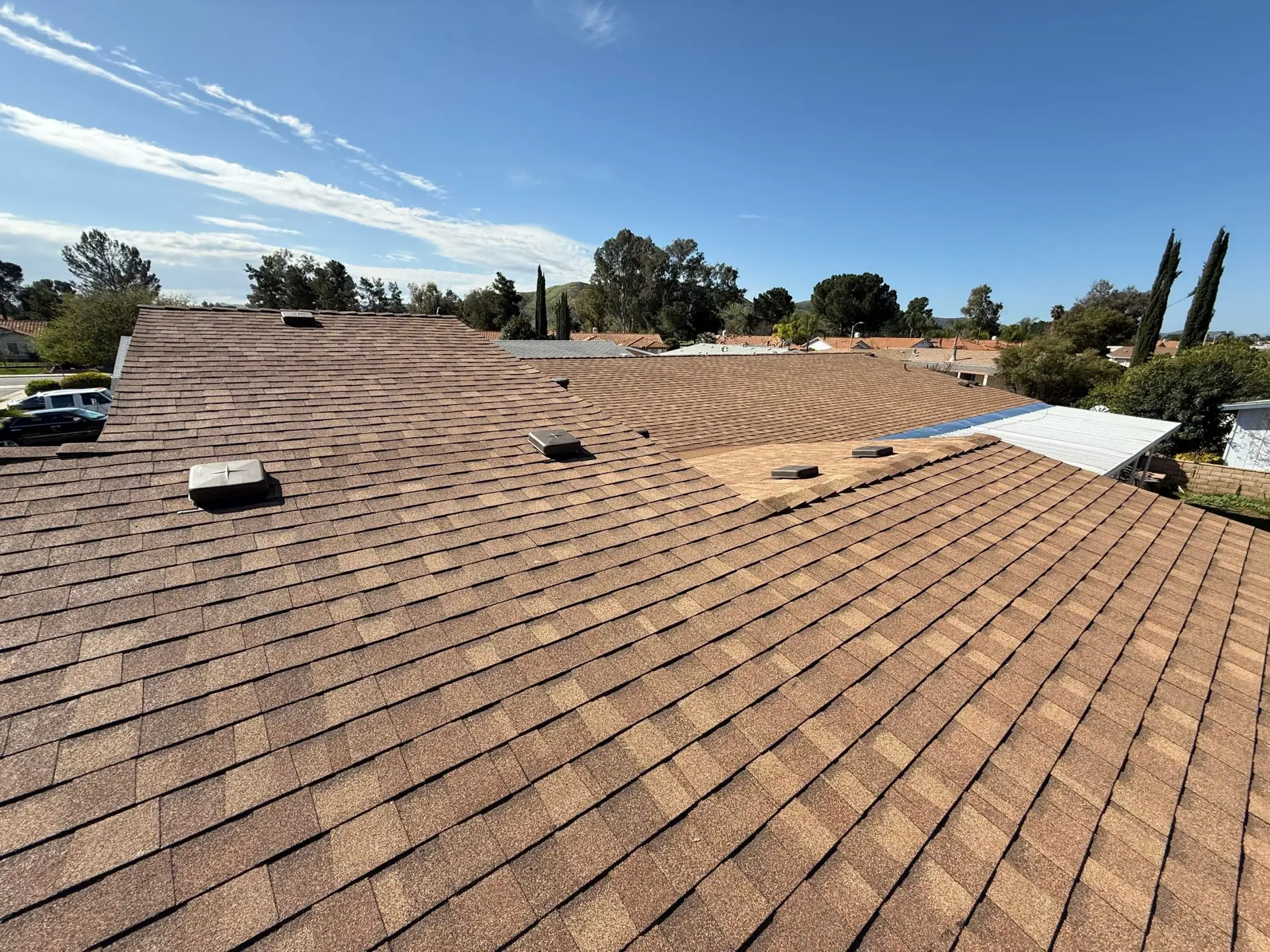
Mobile homes built from the mid-1980s onward and most newer manufactured homes have pitched roofs and use composition shingles similar to site built homes.
Shingle roofs are common throughout Hemet, San Jacinto, and across the Inland Empire.
One important difference is structural capacity. Manufactured home roof trusses are typically not designed to carry the weight of an additional layer of shingles. A proper mobile home roof replacement requires a full tear off of the existing roofing before new shingles are installed.
Contractors who install shingles over an existing layer on a mobile home often create visible problems. The added weight can cause the roof structure to push back against the shingles, leading to cupping, buckling, and premature failure.
Weathertight installs composition shingles on manufactured homes using a full tear off, complete deck inspection, and installation practices appropriate for HUD code construction.
The Most Common Problems for Mobile Home Roofs in Hemet & San Jacinto
With over four decades of roofing work in the Inland Empire, Weathertight has seen the same problem patterns repeatedly on mobile and manufactured homes. Understanding these issues helps homeowners recognize what they may be dealing with before the damage gets worse.
1. Coating Failure and Incompatible Products
Coating failure is the most common problem on flat mobile home roofs in this region. Not all coatings are compatible with all roof substrates or with each other. One of the most problematic situations occurs when multiple coatings have been applied over the years by different contractors using different products.
When incompatible materials are layered together, the system eventually fails. Coatings crack, delaminate, and lose adhesion. In severe cases the roof surface may show widespread cracking across multiple coating layers, while the aluminum underneath has also reached the end of its service life.
A common example involves silicone coatings. Nothing bonds properly to cured silicone except another silicone compatible product. If a previous contractor installed silicone and another coating was later applied over it, that coating cannot properly bond and will fail prematurely.
Before any coating is installed, Weathertight identifies what product is already on the roof and determines whether the surface can accept a new coating or whether the entire system should be replaced.
2. Ponding Water
Flat mobile home roofs are naturally vulnerable to ponding water. Ponding occurs when water remains on the roof for more than forty eight hours after a rain event.
Standing water accelerates coating degradation, increases leak risk around seams and penetrations, adds structural load the roof was not designed to carry, and creates conditions for interior moisture damage.
On roofs where ponding occurs, silicone coatings are usually the correct product choice because they maintain adhesion under standing water. Acrylic and elastomeric coatings can blister or fail under constant ponding conditions.
3. Age-Related Deterioration
Many mobile homes in Hemet and San Jacinto were manufactured in the 1970s, 1980s, and 1990s. Even well maintained roofs eventually reach the end of their service life.
Signs of age related deterioration include:
• widespread chalking or granule loss
• oxidized or faded shingles
• soft spots in the roof deck
• cracked aluminum roof panels
• visible sagging or structural deformation
When these conditions affect the entire roof, a full reroof is often more cost effective than continued repairs.


4. Wind Damage
Santa Ana wind events hit the San Jacinto Valley hard every fall. Mobile home roofs — both flat and sloped — are vulnerable.
On flat roofs, wind can lift coatings, dislodge vents, separate seams, and pull roofing material away from the J-rail and perimeter sealant at the roof edge. On sloped shingle roofs, wind lifts or removes shingles, stresses ridge caps, and exposes underlayment. Wind damage that is not addressed quickly leads to water intrusion at the next rain — often before the homeowner realizes there is a problem.
After any significant wind event it is worth having your mobile home roof inspected, even without obvious visible damage from the ground.
5. Leak Points at Penetrations and Seams
Common leak sources on mobile homes include:
• roof vents and vent pipes
• HVAC penetrations
• seams in aluminum roofing systems
• areas with incompatible repair materials
• perimeter edges along the J-rail
6. Edge Leaks - J-Rail Failure and Low Slope Transition
Edge leaks are among the most frequently misdiagnosed problems on mobile home roofs.
J-rail failure – On flat roofs, when the J-rail sealant fails or the rail separates, water runs directly into the sidewall, often causing interior damage before it shows up as an obvious leak.
Awning transitions and low-slope eave edges – On shingle roofs, the eave edge where the pitch flattens out slows water instead of shedding it cleanly. That slow-moving water works its way under shingles and into the deck. Missing flashing at the awning attachment or low slope transition area makes it worse.
The correct fix:
- Flashing at the transition directing water away from the wall and fascia
- Ice and water shield at the low-slope eave edge — a self-adhering membrane that seals around nail penetrations and keeps water off the deck even if it migrates under the shingles
Weathertight identifies these conditions during inspection and addresses them before the new roof goes on.


7. Roof Leaks Around Swamp Coolers
Many mobile homes in Hemet and San Jacinto use evaporative coolers, commonly called swamp coolers, instead of traditional air conditioning systems. These units sit directly on the roof and require a large opening through the roofing system along with ductwork, mounting brackets, and electrical connections.
Because of this, the area around the cooler is one of the most common leak points on manufactured homes.
Over time, sealants around the cooler base can deteriorate from heat and UV exposure. Fasteners may loosen, flashing can fail, and water can work its way beneath coatings or roofing material. If the cooler has been replaced or serviced multiple times, improper sealing during installation can also create leak pathways.
When Weathertight inspects a mobile home roof leak in Hemet or San Jacinto, the swamp cooler area is always carefully examined. Proper repairs often involve resealing the penetration, repairing flashing details, and ensuring the surrounding roofing material remains fully waterproof.
If leaks around the cooler are ignored for long periods, water can eventually damage the roof deck and interior ceiling around the unit.
Mobile Home Roofing Experience in Hemet & San Jacinto
Mobile home roofing in the San Jacinto Valley presents a set of conditions that are somewhat unique to this region. Over the past four decades, Weathertight Roofing has repaired and replaced mobile home roofs across Hemet, San Jacinto, Menifee, Perris, and surrounding Inland Empire communities. Many of the manufactured homes in this area were built between the 1970s and early 2000s, which means their roofing systems are now reaching the point where repairs, recoating, or full replacement becomes necessary.
Certain mobile home parks throughout Hemet and San Jacinto show very consistent roofing patterns. Older communities often contain flat aluminum roofs that have been coated multiple times over the years. In many cases those coatings were applied by different contractors using different products, which can eventually lead to incompatibility issues and system failure.
Newer manufactured homes in the region tend to have sloped roofs with composition shingles. These roofs typically follow the same general roofing principles as site built homes, but the structural design of manufactured housing means installation details must be handled carefully. Weight limitations, awning attachments, and low slope eave transitions are all details that require specific attention.
Because Weathertight has been working in the San Jacinto Valley since 1983, our crews are familiar with the roofing systems commonly found in mobile home parks throughout Hemet and San Jacinto. That local experience helps us identify problems quickly and recommend repair or replacement options that make sense for the homeowner.
When Mobile Home Roof Repair Makes Sense
Mobile home roof repair is appropriate when the damage is localized and the rest of the roof remains in good condition.
Examples include:
• a single leak point
• a failed vent seal
• seam separation in one area
• limited coating damage
When the overall roof is still sound, targeted repairs can extend the roof’s life and prevent further damage.
When a Mobile Home Roof Replacement Is the Better Option
Some roofs eventually reach a point where repairs are no longer cost effective.
A full reroof is usually recommended when:
• coatings are failing across the entire roof surface
• incompatible coating layers are delaminating
• aluminum roof panels have cracked
• a second layer of shingles was improperly installed
• the roof deck has soft spots
• widespread leaks
At that stage, replacement often costs less over time than continued patching.


Mobile Homes in Parks and on Private Property
Weathertight Roofing services mobile homes located both inside mobile home parks and on privately owned lots throughout Hemet and San Jacinto.
Mobile homes located in parks may have community rules regarding contractor access, approved work hours, or documentation required by park management. In some cases park management may ask to review contractor licensing or insurance before work begins. If your home is located in a park, let us know when scheduling your inspection and we will coordinate with management if needed.
Manufactured homes located on private property typically do not have park management requirements, but work on the home itself may still fall under the permitting authority of the California Department of Housing and Community Development depending on the scope of the project. When permits are required, Weathertight handles the process so homeowners do not have to navigate it themselves.
What a Mobile Home Reroof Looks Like With Weathertight
When Weathertight performs a mobile home roof replacement, here is what the process looks like:
- Full inspection and photo documentation of existing conditions
- Complete tear off of all existing roofing material down to the deck
- Deck inspection, with damaged, rotted, or soft sections repaired or replaced before anything new goes on
- New underlayment installed
- New roofing system installed, whether shingles, aluminum roll roofing, or coating depending on roof type and condition
- All penetrations, vents, and pipe boots properly flashed and sealed
- Awning and low-slope transitions and edge terminations correctly addressed
- Final photo documentation of completed work
Why Weathertight for Manufactured Home Roofing
Weathertight Roofing Inc. was founded in 1983 by third generation roofer Guy T. Schembri in San Jacinto. Today the company continues that tradition under the fourth generation of Schembri roofers.
For more than four decades our crews have repaired and replaced mobile home roofs throughout the San Jacinto Valley.
All Weathertight workers are W-2 employees. We do not use subcontractors and we do not pay workers under the table. This ensures homeowners are protected by our insurance coverage that protects both their home and our crews.
CA Contractor License #643691 — Verify at cslb.ca.gov
Get a Free Mobile Home Roof Estimate
If you need mobile home roof repair in Hemet or San Jacinto and want to work with an experienced mobile home roofing contractor, Weathertight can inspect your roof, document its condition with photos, and give you an honest recommendation on whether repair or replacement is the right call.
Call or text (951) 929-0557 or contact us online to schedule your free estimate.
We serve mobile home owners throughout Hemet, San Jacinto, Menifee, Perris, Winchester, and surrounding Inland Empire communities. For more about our roofing replacement, roofing repair, and roof coating, visit our Hemet service area page or our San Jacinto service area page.
Mobile Home Roofing FAQs for Hemet and San Jacinto
What type of roof coating is best for a flat mobile home roof in the Inland Empire?
It depends on drainage. For roofs that drain properly, elastomeric coating bonds well to properly prepared aluminum substrates and handles the Inland Empire’s extreme heat and temperature swings. For roofs with ponding water, silicone is the right choice because it maintains adhesion under standing water where elastomeric and acrylic products can blister and fail. Weathertight inspects the roof and identifies what is already on it before recommending any product.
Can you coat over an existing coating on a mobile home roof?
Sometimes, but not always. The existing coating must be in sound condition and the new product must be compatible with what is already there. One of the most common problems is multiple incompatible coatings stacked over the years by different contractors. When that system has deteriorated, a full removal and reroof is often more cost effective than adding another layer.
Do you reroof mobile homes with shingles in Hemet and San Jacinto?
Yes. Sloped mobile home roofs are reroofed with composition shingles. Unlike site built homes, mobile home roof trusses are not designed to carry a second layer, and a full tear off is required before new shingles are installed. Weathertight performs a full tear off, deck inspection, and shingle installation appropriate for HUD code construction.
What is a J-rail and why does it cause leaks on mobile homes?
The J-rail is a metal channel installed along the entire perimeter edge of a flat mobile home roof. It secures the aluminum roof roll and seals the edge using butyl tape or sealant underneath it. Because the perimeter relies heavily on sealants and multiple fasteners, the J rail area is one of the most common leak points on older mobile homes. Water gets in when sealant fails or the rail itself separates, often running into the sidewall before showing up as an obvious interior leak.
Why is my mobile home leaking where the awning meets the roof?
The eave edge where a mobile home shingle roof meets a metal awning is a low slope transition zone where water slows down instead of shedding off cleanly. That slow moving water can work its way under shingles in a way that would not happen on a steeper pitch. Missing or improperly installed flashing at the awning wall attachment compounds the problem. The correct fix on a reroof is proper flashing at the transition combined with ice and water shield at the low slope eave edge for extra protection. An awning does not have to be present for low slope eave edge leaks to occur, but awnings make this condition more common.
Do you service mobile homes in parks in Hemet and San Jacinto?
Yes. Weathertight services mobile homes in parks and on private lots throughout Hemet and San Jacinto. If your park has specific contractor or materials requirements, let us know and we will work within those guidelines.
How do I know if my mobile home roof needs repair or full replacement?
If damage is localized, such as one leak point, a failed vent, or a seam separation, targeted repair is likely the right answer. If the coating is failing across the whole roof, multiple incompatible layers are delaminating, the aluminum itself is cracking, or soft spots are present in the deck, then a full reroof is usually the smarter investment. Weathertight provides a photo documented inspection and an honest recommendation either way.
How long does a mobile home roof coating last in the Inland Empire?
A properly applied elastomeric or silicone coating in the Inland Empire’s extreme heat and UV environment typically lasts five to ten years before recoating is needed. Incompatible products, improper surface preparation, or application over a deteriorated substrate can significantly shorten that lifespan. Annual inspection and maintenance help catch issues before they become full failures.
Does mobile home roof work require a permit in California?
It depends on the scope of work and the jurisdiction. Routine coating reapplication often does not require a permit, though requirements vary. A full reroof typically does require a permit. Weathertight determines permit requirements for each job and handles the process when permits are required.